
I was right. 2 words killed it. Here is why.
On comfort, cover, identity, and the question that changes how you present.
Good morning team,
Something different this week. I’m writing this more as a letter. Just me talking to you about something that’s been sitting with me.
If you like this format better, let me know. If you want the usual structure back, tell me that too. I’ll listen.
Unlike the people I’m about to describe.
Imagine, you’ve been watching smart people make bad decisions.
Not because they couldn’t see the data. Not because they didn’t understand the read. Not because they lacked the skills.
Because accepting the new information would mean admitting the old approach was wrong. And admitting the old approach was wrong costs more than most people are willing to pay.
Here’s what this looks like from where I sit.
I walk into every negotiation in every process with hypotheses. Not a blank slate. Not a stack of desk research. Hypotheses. Informed ones. Built from years of participating in, or watching how these rooms actually move.
Then I test them. Over coffee with a delegate before the meeting starts. Watching a side negotiation on a different topic to see how the same players behave when the stakes or topic shift. Listening to what someone says in side event or informal versus what they say behind the microphone. Picking up the phone and texting across regions to check if the signal I’m reading is real or noise.
That’s the work. It’s not sitting at a desk building a strategy in isolation. It’s triangulating in real time. Listening. Challenging your own assumptions against what you’re hearing. Adjusting. Then walking into the room with a read that’s been pressure-tested by actual humans, not just analysis.
And the people who decide? They go with gut feeling. Every time.
Even when the signals aka data points says the landscape has completely changed. Even when the old playbook is walking the process straight into a room it cannot survive.
For a long time, I thought this was my fault.
A communication problem.
If I present the analysis more clearly, they’ll act on it. If I make the case sharper, they’ll listen. If I just find the right words, the right moment, the right framing, they’ll move.
They won’t.
Because the problem was never the quality of my evidence. The problem was what the evidence threatened.
Here’s what took me years to understand.
Diplomacy is both science and art
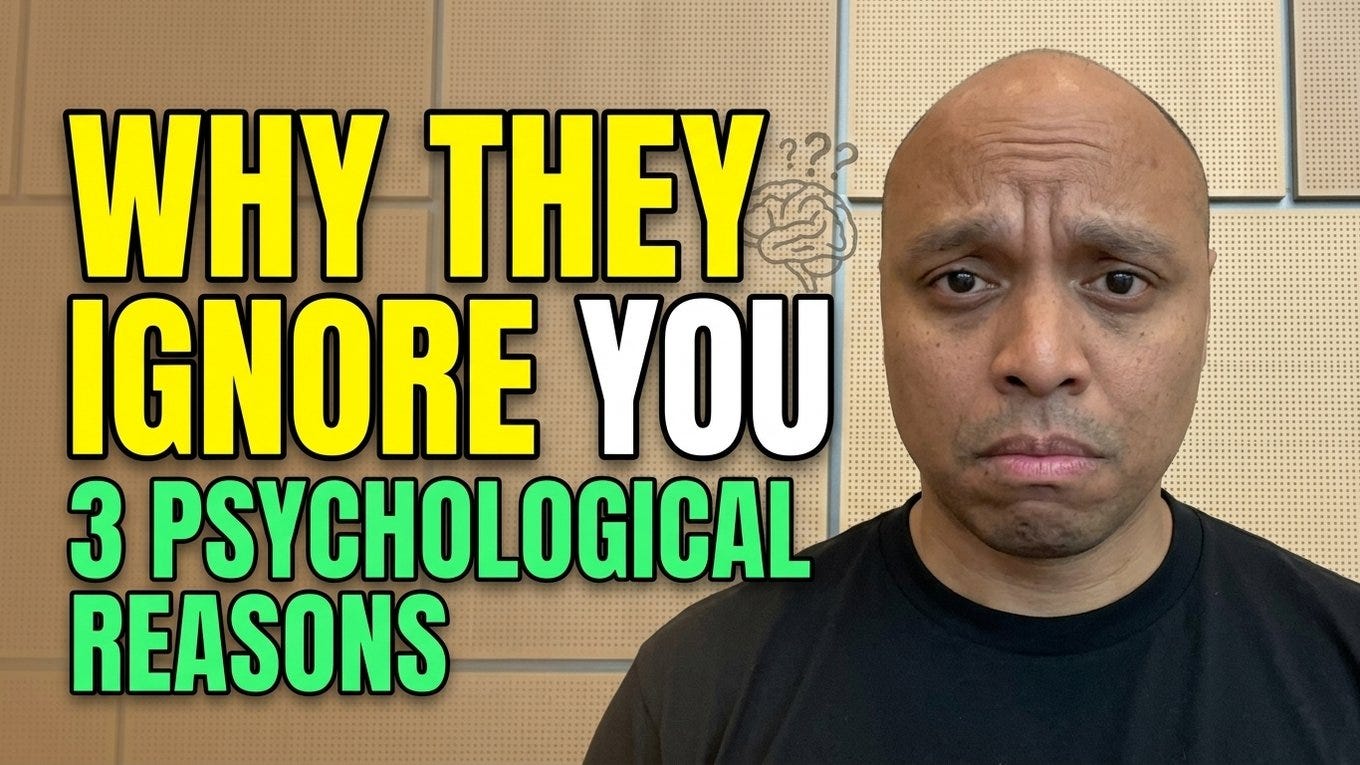
There are three reasons people reject good information.
Yup. Not one. Not two. Three. And if you don’t know which one you’re facing, you will keep wasting your best work on the wrong response. And, I’ve made this mistake more times than I want to admit.
Let me show you what I mean.
Comfort.
The landscape shifts. Alliances that held for a decade fracture. Players who used to show up unified are now trying to figure out their own positioning before they can back anyone else. Budget crisis turns into a weapon. The map changed completely.
And the people running strategy? Still operating on the old map. Not because they can’t see the shift. Because seeing it means rebuilding their entire approach from scratch. Rethinking alliances. Reassessing timelines. Accepting that the comfortable path forward no longer exists.
Most people won’t do that voluntarily. They’ll keep singing aria’s of “business as usual” until the room proves them wrong. By then it’s too late to adjust.
Comfort isn’t laziness. It’s the path of least resistance. And most UN processes are full of Indigenous Peoples walking it.
Cover.
This is the one that got me for years.
People don’t choose the best strategy. They choose the strategy that protects them if it fails.
I tested an alternative path once. Did the triangulation. Coffee conversations across every region. Direct calls. Got alignment from players who almost never agree on anything. The path wasn’t perfect. No path is. No strategy is. But it was designed to keep a process alive without exposing it to a room that had turned hostile.
Someone took it to the wrong person prematurely. Before everyone was behind it. Before the timing was right.
The response?
Too soon.
Two words. And in those two words, everything I needed to know.
“Too soon” wasn’t a strategic assessment. It was insurance. If the process dies the old way, nobody’s fault. Everyone followed protocol. But if it dies the new way, there’s a name attached. A judgment exposed.
So the old process walked into that room. The adversarial players showed up, said what they needed to say, and disappeared into closed sessions where we had zero influence. The allies? Still friendly in tone. But listen carefully to what allies don’t say. Listen to how they qualify their support. That tells you more than any speech.
It went exactly the way the read said it would. Exactly.
Identity.
This is the darkest one.
Some people can’t update their approach because their approach IS them. They built a career on a certain theory of change. A certain way of reading rooms. They’ve told themselves a story about why their method works, told others that story, and now the whole thing amplifies itself.
Admitting the strategy is obsolete doesn’t just mean changing direction. It means the last five, ten, fifteen years of their professional life were built on a foundation that no longer holds.
That cost isn’t tactical. It’s existential.
And no amount of evidence will outweigh a threat to who someone believes they are. You’re not offering them better information. You’re asking them to dismantle the story they tell themselves about why they matter.
They won’t do that. Not for your data. Not for the outcome. Not for anything.
Back to you. You’ve seen at least one or all three.
The colleague who keeps running the same format even though everyone knows it stopped producing results. That’s comfort.
The leader who asks for input, nods thoughtfully, and does exactly what they were going to do anyway. That’s cover.
The person who commissions a review and shelves the findings because implementing them would unravel the narrative they built their reputation on. That’s identity.
Here’s the mistake I kept making.
I treated every situation like it was comfort. I brought sharper hypotheses. Better triangulation. More conversations. More pressure-testing. I thought if the read was strong enough, people would move.
They didn’t. Because comfort was rarely the actual problem.
Most of the time it was cover. Or identity. And here’s what nobody tells you: Stronger evidence makes both of those worse. The clearer your read, the more threatening it becomes to someone whose entire position depends on the old read being right. You’re not helping them. You’re cornering them. And cornered people don’t update. They dig in.
They’ll find out soon enough it’s not business as usual. But by then the damage is done.
So here’s what I do now. And here’s what you can try this week.
Before you bring your read to anyone, ask one question:
What does this person lose if I’m right?
If the answer is nothing, present. They can afford to listen.
If the answer is their comfort, make the change small. Frame it as an adjustment, not a pivot. People can absorb a small update. They cannot absorb “everything you’ve been doing is wrong.”
If the answer is their cover, give them a way to adopt the new position without it looking like a reversal. Frame evolution, not correction. Let them own the update. Your name doesn’t need to be on it. The outcome does.
If the answer is their identity? Stop presenting. Go around them. Find the people who can afford to act on what’s real. Build with them. Let the outcome do the persuading your analysis never could.
And sometimes, after you’ve done all of that, they still won’t move.
Not because of comfort. Not because of cover. Not because of identity.
Because some people would rather watch the whole thing burn than let someone else be right. That’s not a strategic problem. That’s a character problem. And no framework fixes that. The only move is to stop wasting your read on people who were never going to use it and start building with people who will.
The read was right. The audience was wrong.
That was my lesson. Maybe it’s yours too.
If this shifted something, forward it to one person who needs it.
See you next week!
P.S. It would mean the world to me if you could pick your preference.