
How 18 Years in Kitchens Taught Me to Read People at the UN
What kitchen work taught me that diplomatic training never could.
Good morning!
You probably don’t know I worked 18 years in the hospitality business. Not part-time. Not just for money, but to pay my UN missions. Full-time. Kitchen deep.
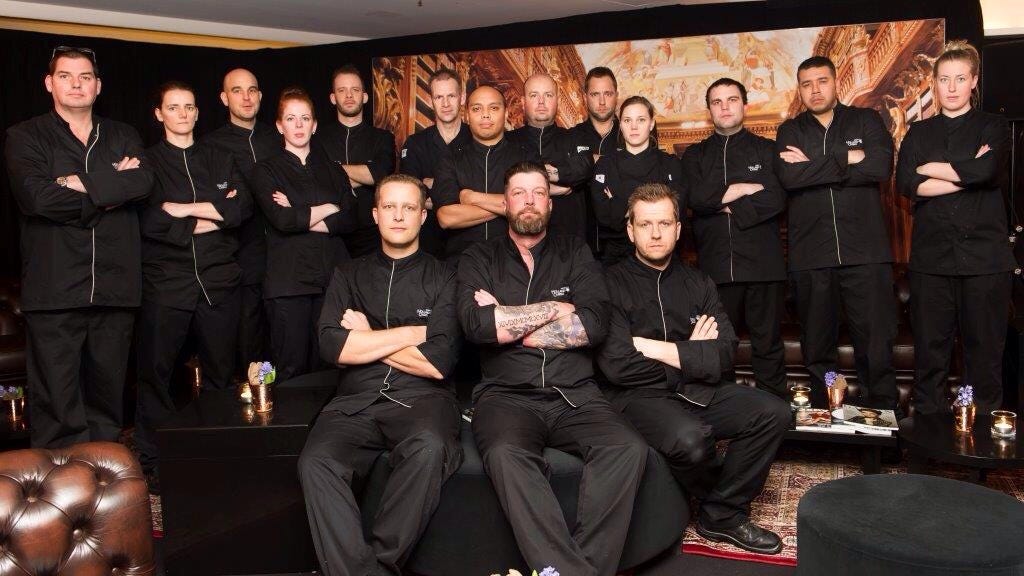
Chef roles across three different stations at Holland Casino in Amsterdam.
In the bistro-style “Take 5” kitchen, you moved fast. Woks, sandwiches, short orders. The pressure was constant.
In the “Canteen” personnel kitchen, it was about consistency. Feeding staff. Supporting the system behind the scenes.
And in the main restaurant, the stakes were high. Daily specials. A la carte. Timing and presentation mattered.
Three different rhythms. Same standard.
The Kitchen Teaches You to Think Ahead
In the kitchen, everything was about anticipation. You think ahead. You prep before it's needed. You scan the room. You adjust before it becomes a problem.
And when someone on the team dropped the ball, you didn't shrug. You stepped in. No questions. No drama.
And if someone was messing up, you let them know.
I remember one evening, we were deep in a dinner rush. Plates ready to go. Tickets piling up. But the food runner? Taking his jolly old time. Walking slow. Acting like the pace didn't apply to him.
I held it in. Until I couldn't.
When he finally came to pick up the plates, I exploded.
Gordon Ramsay style, and the headchef heard it.
She heard me from the other side of the kitchen. Called the floor manager on the spot and said, "Replace the food runner. I've never seen Ghazali like this."
The food runner shrugged it off. "Relax."
But he didn't get it.
If food came back cold, it would be me in the shit. I was already backed up. Orders kept coming. I didn't have time for someone else's casual pace.
That's what I mean when I talk about mindset.
About urgency. About responsibility.
Btw, going Gordon Ramsay style and getting in people’s face when they messed up?
That’s something I miss in diplomacy.
The Problem with People Who've Never Felt That Pressure
I have a hard time working with people who've never had that kind of pressure on them.
Not because they're not capable. But because they've never had to care in that specific way. Where one weak link makes the whole line collapse. Where your prep protects someone else's night. Where your standard isn't about perfection, but about not letting the brigade fall apart.
In hospitality, you stayed late because walking out meant screwing someone over. You cleaned up because it wasn't just your mess. You kept going because you knew someone else was about to break.
One year we had the grand casino party. Thirteen-hour shift. Wall to wall chaos.
No complaints. No one bailed. We were there for each other.
How Kitchen Mindset Shows Up in Diplomacy
That's the culture I bring into everything I do now. Especially diplomacy.
I prep the way I did in kitchens. Sharp. Ahead of time. With others in mind.
At the second HRC intersessional on enhanced participation, I wrote and sent out ten daily briefings to Indigenous delegates. And then a primer on the day of. Not because someone asked me to. Because it needed to be done. I also wrote cheat sheets. Designed decks. Recorded walkthroughs.
That's not extra. That's the job. That's how I move.
And that's where the friction comes in.
Because when you've worked in high-pressure, high-responsibility environments, where the system only runs if you show up fully, it's hard to work with people who move slow. Who wait to be asked. Who don't see what's at stake until it's already gone sideways.
At COP28, one Indigenous delegate told me it all made sense when he heard I used to be a chef. He saw how I managed time, team, and tension. The pacing. The adjustments. The instinct to look ahead and move without overexplaining.
He got it.
Kitchens Teach Emotional Intelligence the Hard Way
Because kitchens teach you clarity under fire.
They also teach you emotional intelligence the hard way. Not from theory. But from getting it wrong in real time. Misreading someone's mood. Forgetting an order. Dropping the ball and having to recover while still serving others.
You learn to read people. You learn to hold the standard and the temperature. You learn that it's not enough to do your job. You have to do it in a way that doesn't burden the person next to you.
That's why I still walk fast. That's why I still pay attention to how people treat staff.
You want to know someone's character? Watch how they treat the cleaner. The food runner. The waiter who's having a rough night.
What 18 Years in Hospitality Actually Taught Me
Here's what you learn when the line can't break.
1. You show up early to protect your team.
In the kitchen: Being on time wasn't enough. I'd come in early to overlap with whoever I was relieving. Make lists. Get things sorted. So they could leave without worry and I could start clean.
In diplomacy: I send cheat sheets or briefings before meetings start. Not because someone asked. Because walking into complex negotiations without context screws everyone. At the HRC intersessional, I wrote ten daily briefings for Indigenous delegates. Pre-meeting prep protects the whole delegation.
