
'Indigeneity' Is Quietly Undermining Indigenous Rights
It's in almost every UN resolution. It sounds good. And it's meaningless.
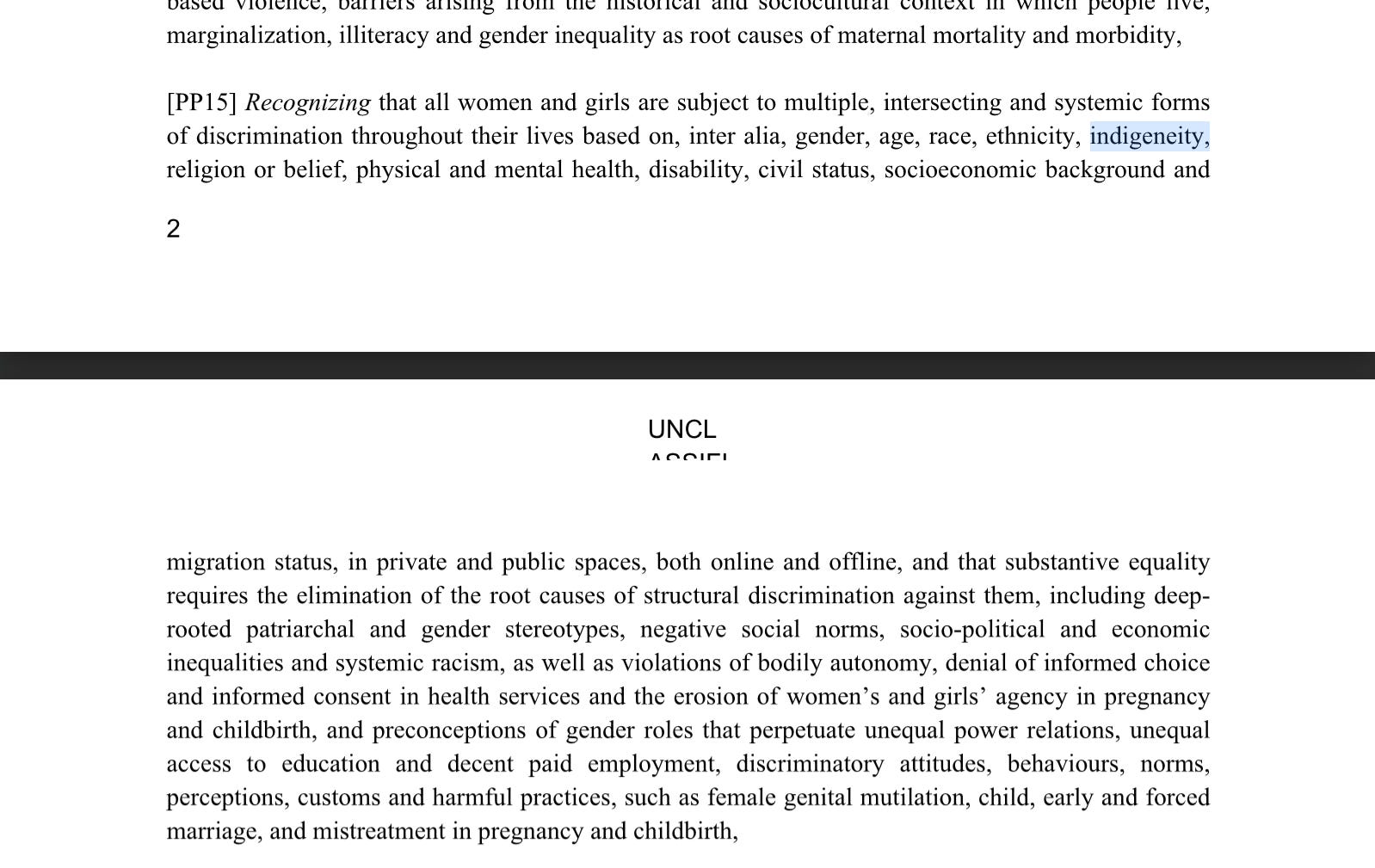
I was in another HRC60 negotiation this week, scanning through yet another draft resolution. The usual suspects appear: "….no discrimination based on race, color, sex, language, religion..." and there it is.
"Indigeneity."
Most Indigenous leaders probably see this and think, "Great! We made it into the text." Finally, recognition. Finally, we're mentioned alongside the other protected categories.
But here's my reaction: "What the hell is Indigeneity in international law?"
Let me tell you why this matters more than you think.
The Question That Breaks Everything
So I go looking. Where is "Indigeneity" defined in international law?
UNDRIP? Nope. Talks about Indigenous Peoples and individuals, not some abstract concept called "Indigeneity."
ILO 169? Nada. Focuses on Indigenous and Tribal Peoples, their rights, their territories.
Any other UN treaty? Good luck finding it.
Here's the thing. If I'm asking this question after 20 years in UN negotiations, you can bet States are asking it too. And when they can't find a legal definition, guess what happens?
It gets into the text. Looks good on paper. But when implementation time comes? They skip it entirely.
Here's What Happens Next
States agree to protect "Indigeneity" because it sounds progressive. But when implementation time comes? "Sorry, we don't have legal guidance on what Indigeneity means."
It's the perfect empty gesture. Looks good in adopted text, delivers zero protection.
What Actually Exists in International Law
UNDRIP Article 2 is crystal clear: "Indigenous Peoples and individuals are free and equal to all other peoples and individuals and have the right to be free from any kind of discrimination, in the exercise of their rights, in particular that based on their Indigenous origin or identity”
The Implementation Gap
I've seen this movie before. Beautiful text gets adopted. Everyone celebrates. Then comes the legal analysis.
Government lawyers ask: "What does this require us to do?"
Legal department responds: "Well, Indigeneity isn't defined anywhere in our treaty obligations, so..."
Result? Nothing. The word sits in adopted text while Indigenous Peoples get zero protection.
Meanwhile, "Indigenous identity" or "Indigenous origin" sends lawyers straight to UNDRIP. Clear obligations. Clear implementation pathways.
Why This Pattern Keeps Repeating
The most dangerous words in international law are the ones that sound meaningful but have no legal substance. They create the illusion of progress while providing zero protection.
States love them because they can agree without committing to anything. Indigenous advocates celebrate them because inclusion feels like progress. But inclusion without enforceability is just performance.
When we accept vague academic language over precise legal terms, we're trading real protection for symbolic recognition. That's not strategy. That's getting played.
What You Can Do Right Now
Next time you see "Indigeneity" in a draft, don't ask questions. Act.
Reference UNDRIP Article 2 and replace "Indigeneity" with "Indigenous origin" or "Indigenous identity."
What does Article 2 say?
Indigenous Peoples and individuals are free and equal to all other peoples and individuals and have the right to be free from any kind of discrimination, in the exercise of their rights, in particular that based on their Indigenous origin or identity.
International law is a precision game. Use words that have legal weight.
Before You Go
If it sounds too academic, if you can't find it in UNDRIP, if it makes Indigenous existence sound like a research topic? Question it. The goal isn't getting Indigenous-sounding words into UN text. It's getting enforceable rights that actually protect our people.
Sometimes the most important battles happen one precise word at a time.
See you next week!