
Why You Should Ignore the COP President (For the First Week)
COP30 day 25 of 30: Why SB Chairs control everything (and the exact approach that gets their attention without wasting it)
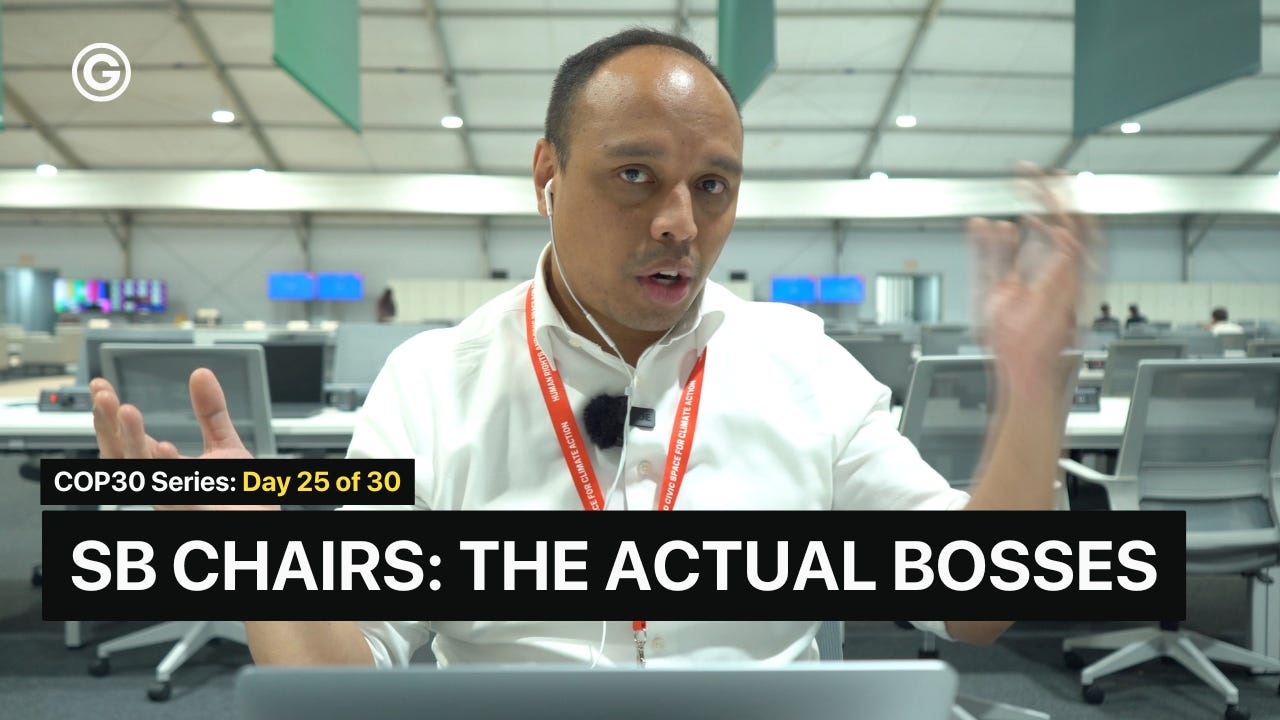
Welcome to day 25 of your 30-Day Series!
In this series, we’re building from LCIPP mechanics through Indigenous participation frameworks to COP negotiating tactics. By day 30, you’ll understand how Indigenous Peoples move from values to operative text at the world’s largest climate negotiations. Today we’re talking about the SB Chairs, the most powerful people you will deal with in Week 1.
During the first week of COP, you will hear everyone talking about “the SBs”. This stands for the “Subsidiary Bodies,” which are the two technical engines of the conference:
SBSTA: (Subsidiary Body for Scientific and Technological Advice)
SBI: (Subsidiary Body for Implementation)
These two bodies meet for the entire first week. Each one is run by a powerful, elected official called a “Chair”.
While the COP President is busy with high-level politics, the SB Chairs are the ones who are the managers of their part of the conference. They are the problem-solvers and the true “bosses” of the first week.
What Do the SB Chairs Actually Do?
The SB Chairs are hands-on managers who monitor every single negotiation. Their job is to get a “clean” text to the President by the deadline.
They Appoint Facilitators: The Chairs are the ones who appoint the (supposedly neutral) co-facilitators for every single negotiating group.
They Manage the Co-Facilitators: They meet with their co-facilitators to get progress reports and sometimes give them advice on how to get the room to a conclusion faster.
They Meet with Constituencies: Just like co-facilitators, the Chairs will schedule meetings with the constituencies. This is not to become your ally, it is to gather information and find out what you need to agree to a deal.
They Manage the Clock: The Chairs control the schedule. They can grant more time for a negotiation if it is making progress. For example, during the FWG negotations the SBSTA Chair gave us “20 more minutes” to close the deal, and then another 20, provided we were showing results.
The SB Chairs Are Obsessed with Consensus
This is the key: The SB Chairs are not your “court of appeal” for justice. They are your managers for progress. Their single, driving goal is to get consensus as fast as possible on all items before the Week 1 deadline.
They are not there to rule on whether a Party is being “unfair”. They are there to solve the blockage.
You do not go to the Chairs with complaints about fairness. You go to them with solutions to a blockage. They meet daily with the COP Presidency. They are the ones who report on what is stuck and what needs political help. Making them aware of your solution is the first step to getting it “raised” to a higher level.
How to Use the Chairs Effectively
You must be strategic when you approach an SB Chair. Wasting their time is a fast way to lose influence.
Don’t Go to Them First: Never go to a Chair before you have tried everything with your co-facilitators. They will just ask, “What did the co-facilitators say?”
Go with a Progress Report, Not a Complaint: Do not bring them a bracketed word. Bring them a broken process and your solution.
Bad: “This is unfair! This Party is blocking us!”
Good: “We are making progress on Indigenous rights, but we are stuck on one issue. We believe if you give us more tiem, we can end the negotaitions with this solution...”
Meet with Them as a Caucus: Request a formal meeting as the IIPFCC (the caucus) to give them your high-level overview. Tell them where you see progress and where you see blockages. This helps them do their job.
Before You Go
The SB Chairs are your allies for ensuring progress. Use them wisely. They are the bridge between the technical rooms of Week 1 and the political deals of Week 2.
But what about the political deals themselves? There is a secret “board of directors” that advises the President on the process for the whole COP.
Tomorrow, I will explain a high-risk high-reward strategy at COP.
P.S. In your community, who is the person everyone goes to when a project is stuck and needs a manager, not just a leader?