
How to Win by Losing at COP30
COP30 day 18 of 30: The goal at COP is not "victory."
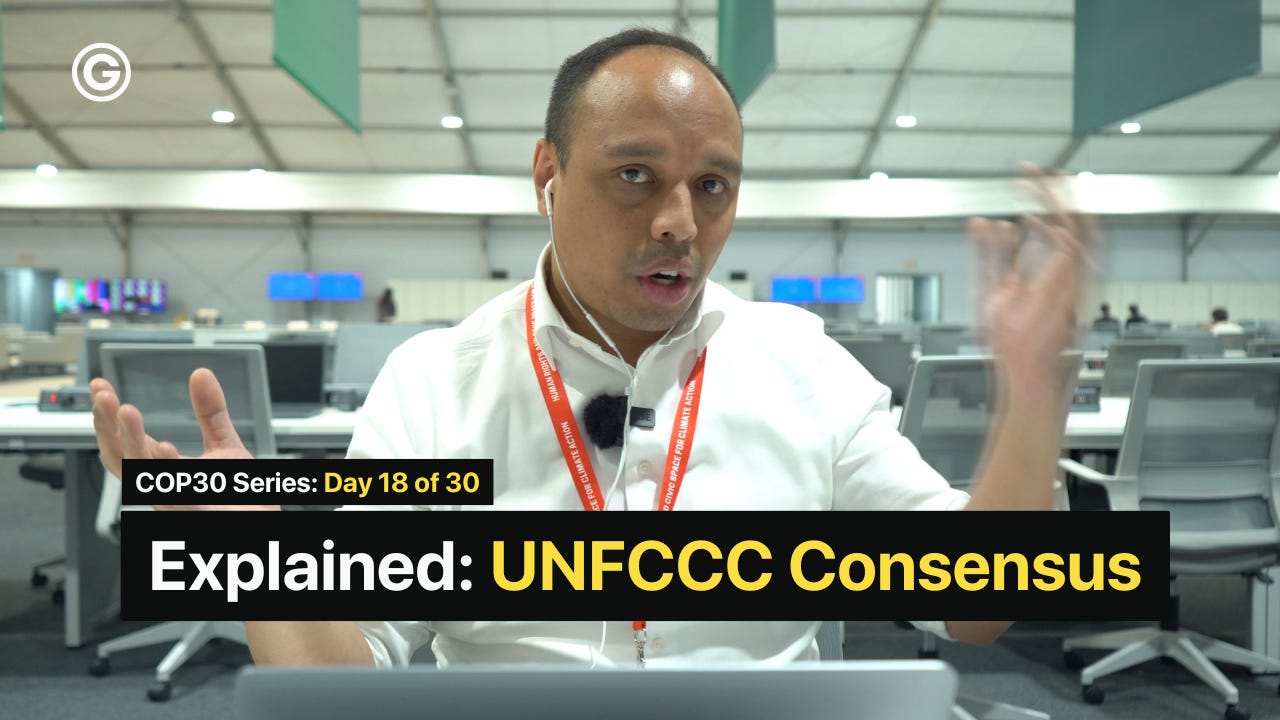
Welcome to day 18 of your 30-Day Series
In this series we’re building from LCIPP mechanics through Indigenous participation frameworks to COP negotiating tactics. By day 30, you’ll understand how Indigenous Peoples move from values to operative text at the world’s largest climate negotiations. Today we’re talking about why you’re aiming for the wrong goal.
Let’s say we’re coming to the end of COP30.
You have fought for two weeks. Defended your text.
You have pushed your way around informal consultations, huddles and side events.
Now, you look at the final draft text. The paragraph you fought for is weaker than you wanted. And to get it, your allied Party had to accept another decision on a different topic that you do not like.
You feel... disappointed. You feel like you lost.
This is the great paradox of the UN. You have not lost. You have succeeded.
Let me explain how the UN thinks about it:
A “successful conference” is one where “no-one will be totally happy with the results.” If you go in aiming for total 100% victory, you will fail. You must understand the real goal.
The “Consensus” Trap
The entire UNFCCC process runs on a single rule: “consensus.” This one rule is the key to everything.
What it ISN’T: Consensus does not mean “unanimity.” It does not mean everyone loves the text or actively agrees with it.
What it IS: Consensus means “that no party formally opposes adoption.” That is it. A country can hate a decision, but as long as they do not “formally object,” consensus is “maintained.”
The Veto Power: This one rule gives every single country a de facto veto. Because any one of 190+ countries can block a decision, the entire two-week conference is a search for a compromise that all of them can live with.
The “Package Deal”: Because of this veto, no one decision is agreed to alone. In the final days, all the different decisions (on finance, adaptation, loss and damage) are bundled into a “package.” Parties will often want to see them all together before taking an overall position. That’s why COP closing plenaries are delayed more often than not.
Your Goal is Not Victory, It’s Balance
Here’s the lesson I learned: Your goal is not total victory on your single issue. Your goal is to ensure that your issue is part of the final “balanced” package.
In the final hours, Parties look at the “package” and ask: “Is there an overall balance between the way our interests are reflected across all of them?”
This is how they negotiate. The President’s job is to find the best balance that can be found between the interests of everyone. Observe the zig-zagging of the Presidency.
A “successful” outcome is one where parties can agree to adopt... feeling that the final versions reflects most of their points to some degree, but also knowing that they didn’t get everything (and neither did their adversaries).
Want to win? Stop trying to win. Try to make your issue so essential to the “overall balance” that the package cannot be seen as “fair” without it.
The “Equally Unhappy” Problem
This process doesn’t make any sense to the outside world:
It Is Slow: It gives an opportunity for Parties that want to stop action by slowing down or blocking progress.
It Forces Compromise: Everyone’s key demands will be watered down. They will be asked to accept things you hate. The final package is one where everyone is equally unhappy.
The “Not Joining” Move: Sometimes a Party will make a powerful political statement. For example, Nicaragua at COP21 stated it was “unable to join the consensus” but did not formally oppose it. This allowed the Paris Agreement to be adopted, while their dissent was officially recorded.
The “Loser” Problem: The real goal is to ensure that no-one should feel they have been the losers from the deal. You must accept being “unhappy” to prevent being the “loser.”
Before You Go
A week ago I talked about consenus in the IIPFCC.
Under the UNFCCC it’s not very different. You will not get everything you want. No one does. But by understanding the game, you know that no Party wants to be the one who will feel left at the altar at the end.
You are in Week 1. You understand the rules of text, huddles, and consensus. But a “crunch point” is coming that changes everything.
Tomorrow I will explain the week 1 deadline and how the entire conference changes rhythm on the middle Saturday.
See you tomorrow!