
How to Use the UN's "Memory" (The Secretariat)
COP30 day 28 of 30: In every single meeting, from your smallest negotiating group to the final closing plenary, you will see a group of people at the front who do not speak for any country.
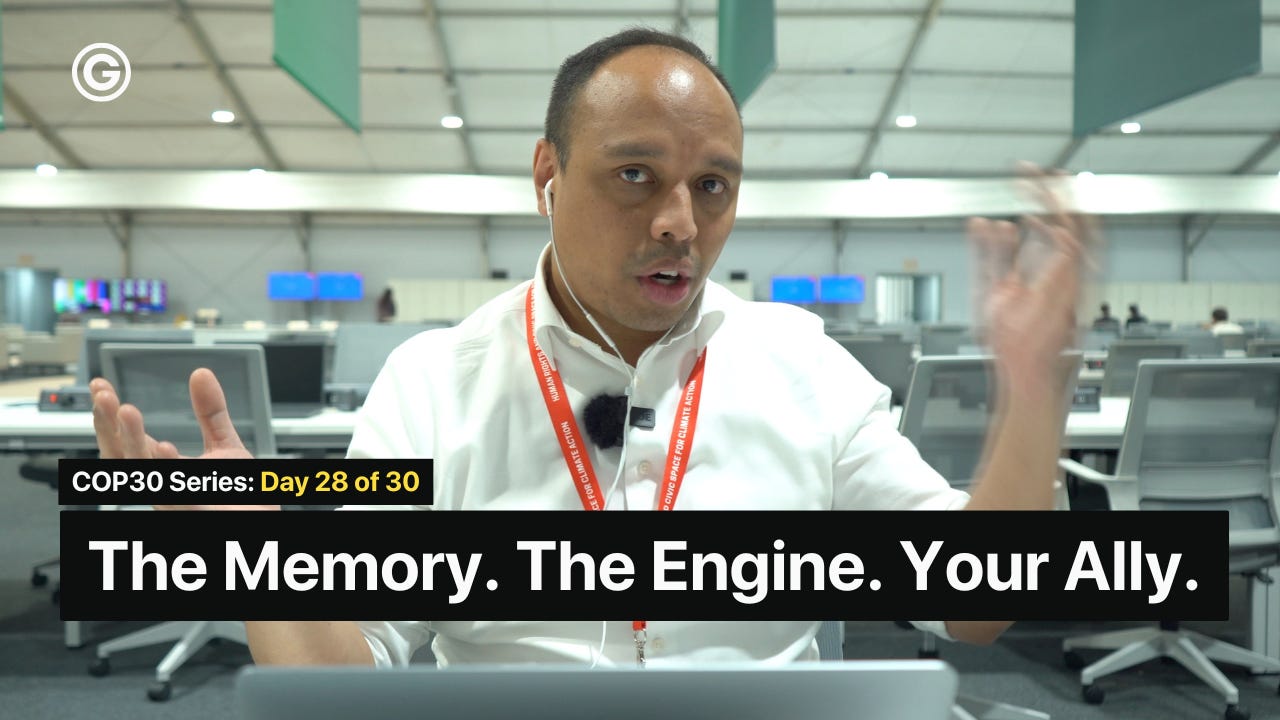
Welcome to day 28 of your 30-Day Series!
In this series, we’re building from LCIPP mechanics through Indigenous participation frameworks to COP negotiating tactics. By day 30, you’ll understand how Indigenous Peoples move from values to operative text at the world’s largest climate negotiations. Today we’re talking about the “Secretariat”, the engine of the UNFCCC process.
In every single meeting, from your smallest negotiating group to the final closing plenary, you will see a group of people at the front who do not speak for any country.
They are the UN “Secretariat”.
To a first-timer, their role is confusing. They look like they are in charge, but they never speak. They are not Parties. They are not Observers. They are not the President. So, what do they do?
The Secretariat is the institutional “memory” and “engine” of the entire COP. They are the only ones who know all the rules. They are not a target for political influence, but they are your most critical ally for all procedural and logistical matters.
What Does the Secretariat Actually Do?
The Secretariat staff are the civil servants of the UN. They are the only people who are at every COP, year after year.
They Are the “Memory”: They have the institutional memory of the process. They know the history of every agenda item. They know what was decided at the last COP and why.
They Support Facilitators: They are the ones who sit next to the co-facilitators in your negotiating room. When a co-facilitator needs to know a rule or find a past decision, they turn to the Secretariat.
They Handle the Text: They are the ones who physically manage the text. When your facilitator produces a new “iteration,” it is the Secretariat who formats it, gets it translated, and posts it on the website as an “L-document”.
They Run the Logistics: They manage the entire conference, from schedules to booking the rooms for your “informal-informal” meetings.
The Secretariat is Your Procedural “Help Desk”
Do not ever try to lobby the Secretariat on a political point. Do not ask them to “add rights” to a text. They are bound by their neutrality and will refuse. It is the wrong way to use them.
Instead, you must use them as your procedural “help desk” and historical “library”.
They are your ally for process. If you are in a meeting and a Party makes a claim that is factually wrong (e.g., “This was never agreed to!”), your ally can turn to the Secretariat and ask them to check the record. This is a neutral, powerful move.
How to Use the Secretariat Correctly
You must build a professional relationship with the Secretariat staff who are assigned to your key issues.
Ask Procedural Questions, Not Political Ones:
Bad: “We need you to help us get our text in.”
Good: “What is the procedure for getting our new proposal included as an official submission for this agenda item?”
Use Them for History:
Bad: “Don’t you agree that Parties should...?”
Good: “Can you point us to the last decision from COP27 where Parties discussed this issue?”
Use Them for Logistics:
Good: “Our working group needs to book a room for an urgent informal meeting. Can you help us with that?”
The Secretariat helps the co-facilitators write the draft. They will work all night to capture the proposals, but they will never add their own ideas. Do not ask them to.
Before You Go
The Secretariat is the “engine” of the COP. They are not the driver, but the car will not move without them. Be polite. Be professional. Use them as the expert resource they are. They are your best friend for how to do something, not what to do.
You now know all the players: Parties, Facilitators, Chairs, the President’s Team, and the Secretariat. You are ready for the final, chaotic days.
Tomorrow, I will explain “How to Write the Closing Statement”, your final, official act of the COP.
See you then!