
BBNJ Agreement: Indigenous Peoples Brief Sets New Standards (PDF Attached)
Two-month consultation process produces tactical framework for marine biodiversity governance.
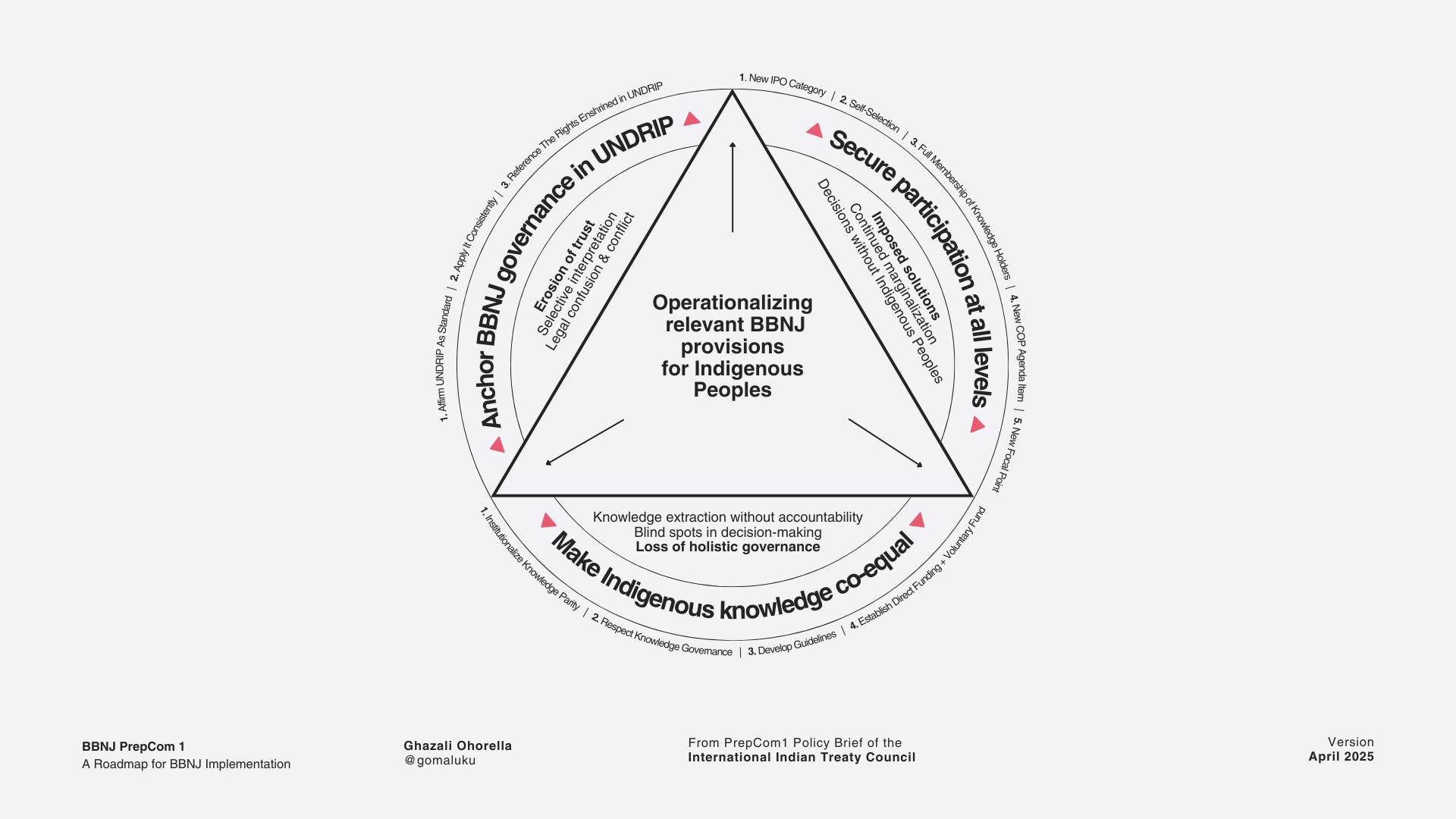
The future of the ocean is being negotiated and Indigenous Peoples are not waiting to be invited.
For two months, Indigenous Peoples from every region came together in strategy mode through live consultations, written submissions, and grounded conversations across time zones and coastlines.
The result? A field-tested policy brief sponsored by the International Indian Treaty Council (IITC), backed by the High Seas Alliance, and built from the bottom up.
Not symbolic. Not aspirational.
Operational. Tactical. Anchored in law.
Here’s what it pushes for, and why it matters if you care about marine biodiversity governance that’s actually inclusive:
1. UNDRIP isn’t optional. It’s the floor.
The BBNJ Agreement recalls it. Now the PrepCom and COP must operationalize it.
That means decision-making power, not just visibility.
2. We are not NGOs. We are Nations.
Indigenous Peoples must be recognized as a distinct category with participatory rights at least equal to NGOs, and procedural access to consensus-building, not just consultation windows.
3. Our knowledge isn’t traditional. It’s strategic.
This brief doesn’t romanticize Indigenous knowledge. It asserts its co-equal standing with science and demands full integration across all decision-making bodies—from the Scientific and Technical Body to Environmental Impact Assessments.
4. Ocean health is not a metaphor. It’s a mandate.
The brief calls for a standing COP agenda item: “Status of the Oceans.” So Indigenous Peoples can speak directly and regularly on what’s changing, what’s threatened, and what’s being ignored.
5. Funding must be direct, not filtered.
No more navigating gatekeepers. The brief demands a dedicated funding mechanism for Indigenous-led initiatives, accessible across all seven socio-cultural regions, no unnecessary red tape.
PrepCom has work to do:
Finalize rules of procedure that reflect our distinct legal status.
Ensure Indigenous knowledge holders are full members of every subsidiary body.
Embed Indigenous governance into the heart of BBNJ structures, not as an add-on, but as a foundation.
Lock in a permanent COP agenda item on ocean health.
Design a funding window that works for us, not against us.
This is what collective diplomacy looks like:
Consulted. Coordinated. Clear.
If the COP gets this right, it won’t just be a win for Indigenous Peoples.
It’ll be a win for legitimacy, biodiversity, and the future of global ocean governance.
If you're negotiating, this is your test.
If you're observing, this is your cue.
If you’re Indigenous, this is your mandate.
The ocean doesn’t need more promises.
It needs power-sharing.
Download the full brief. Read our framework. Understand our position.
